
Lima, January 15, 2026.- The Executive Director of PROINVERSIÓN, Luis Del Carpio, participated in a meeting with business leaders organized by the Lima Chamber of Commerce, where he presented the 2026–2028 investment portfolio of Public-Private Partnerships (PPP), Asset Projects (PA), and Works for Taxes (OxI), totaling more than US$ 21 billion for the benefit of 23 regions nationwide.
During his presentation to the Maritime, Port, and Customs Affairs Committee of the Lima Chamber of Commerce, he also highlighted PROINVERSIÓN’s role in promoting private investment to close infrastructure gaps and support decentralization.
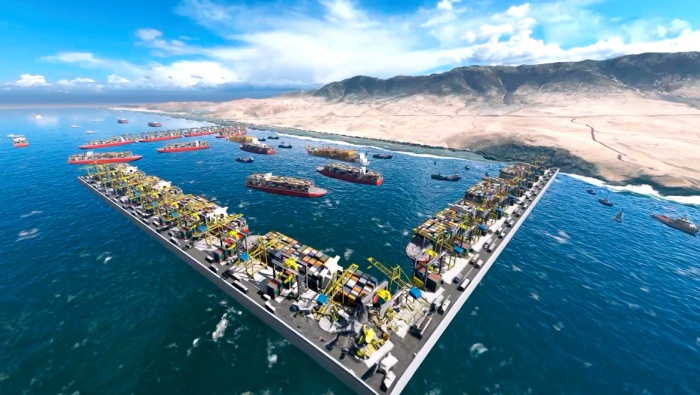
In this context, he noted that the Agency is currently promoting seven (7) port investment commitments under the PPP framework, totaling more than US$ 4.521 billion, which will benefit five (5) regions of the country—Loreto, Áncash, Callao, Ucayali, and Arequipa—and significantly enhance Peru’s logistics connectivity with global markets.
He further emphasized that private investment in ports under the PPP model has a direct impact on regional economic development. “Between 2001 and 2025, total exports increased more than elevenfold, rising from US$ 7.0 billion to US$ 79.9 billion,” he stated. “For every 1% increase in port PPP investment, a 1.64% impact on regional economic development is expected,” he added.
Thanks to the development of the national port system under the PPP framework, Peru’s exports have diversified. Since 2019, the country has become the world’s leading producer of blueberries and quinoa, and the second-largest producer of asparagus.
Del Carpio noted that the convergence of interoceanic corridors and port modernization positions Peru as a potential regional logistics hub, capable of boosting cross-border trade, diversifying routes, and reducing logistics costs.
He also reiterated that PROINVERSIÓN’s PPP project portfolio aims to promote Peru’s logistics connectivity, strengthen territorial planning governance, and consolidate stronger links with Asia-Pacific markets. “This will be achieved through an investment system guided by clear direction, prioritization, and equity,” he concluded.